
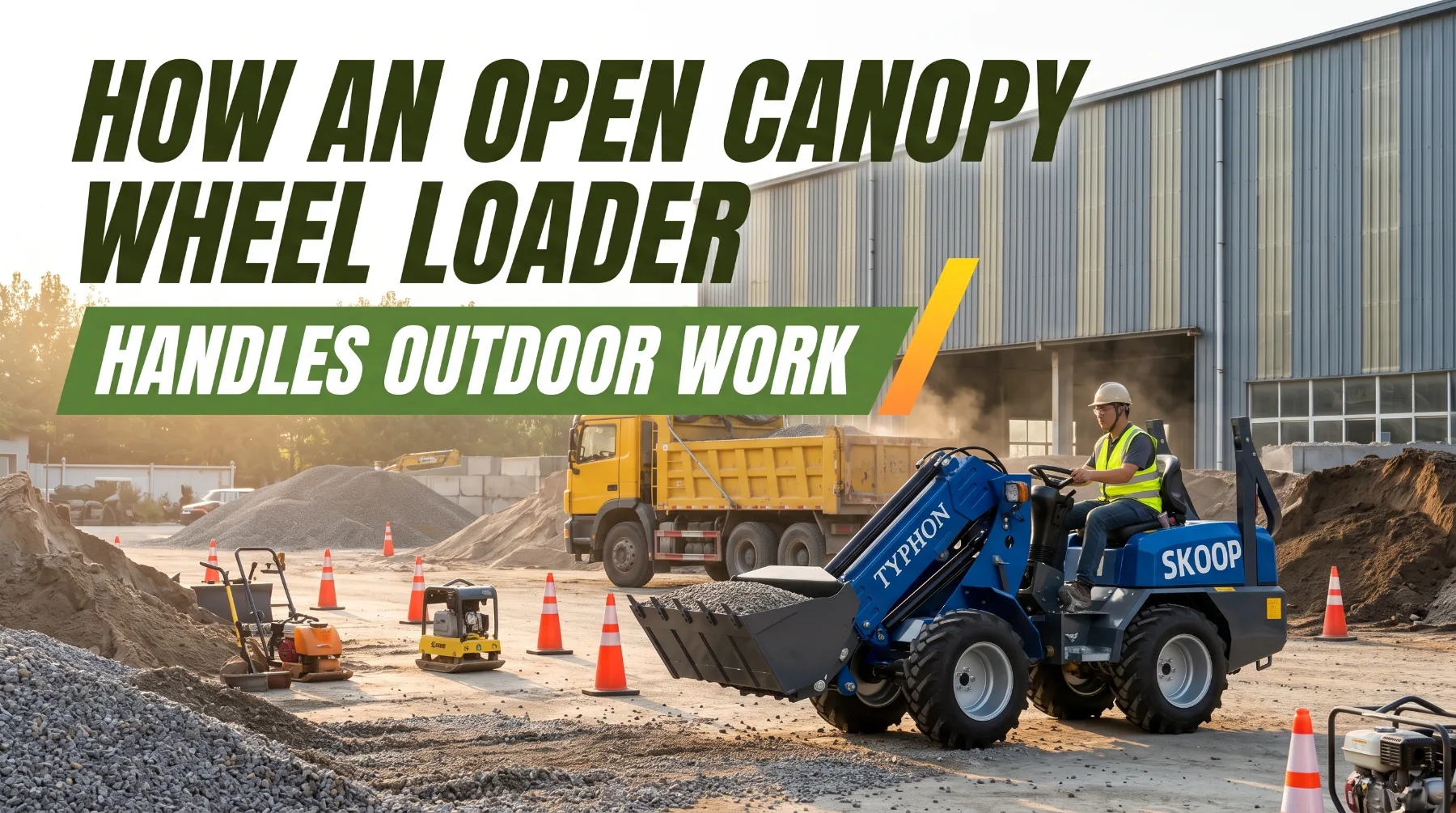
Open construction sites often require wheel loaders to spend long hours moving gravel, aggregate, and other bulk materials between stockpiles and waiting trucks. The work may continue under strong sunlight, warm air, dust, and changing weather, making operator access and visibility important throughout the shift. Instead of enclosing the operator in a full cab, a canopy setup provides overhead coverage while leaving the sides open. That layout allows air to move through the station, keeps sightlines open toward the bucket and surrounding work area, and makes it easier to enter or exit between loading cycles.
For outdoor material handling, an open canopy configuration can provide practical advantages when full weather protection is not essential. The operator has direct access to the controls and a broad view of nearby piles, trucks, and ground personnel. Open sides can also improve airflow during hot working conditions, while the overhead structure provides some protection from direct sunlight and light weather. These characteristics make the setup useful for steady work across open construction and material-handling areas.
Jobsite conditions still determine whether the configuration is appropriate. Weather exposure, dust, material type, traffic movement, operating hours, and the need for operator protection should all be considered before putting the loader to work. Routine checks of the canopy structure, mounting points, controls, seat area, and surrounding components help keep the operator station secure and functional. Matching the loader to the environment allows its open access and visibility benefits to support productive outdoor operation.
Open Access Around the Operator Area
An open canopy design gives the operator direct access to the station without the doors, glass, and framing of a full cab. On outdoor jobs built around repetition, that access is a genuine daily advantage. Loading trucks, building stockpiles, and shuttling material all involve getting on and off the machine, and an open station makes each of those transitions quick and easy rather than a chore worked around a cab door.
The open layout also gives the operator an unobstructed feel around the sides of the machine during material handling. With fewer structures between the operator and the work, judging the position of the bucket, the pile, and the ground comes more naturally. For a workday full of short cycles and frequent stops, that combination of easy entry and open surroundings keeps the operator moving and the job flowing.
Key takeaway: The open canopy provides direct station access and an unobstructed feel around the machine, which suits outdoor jobs with frequent entry, exit, and repeated material-handling cycles.
Visibility Across the Work Area
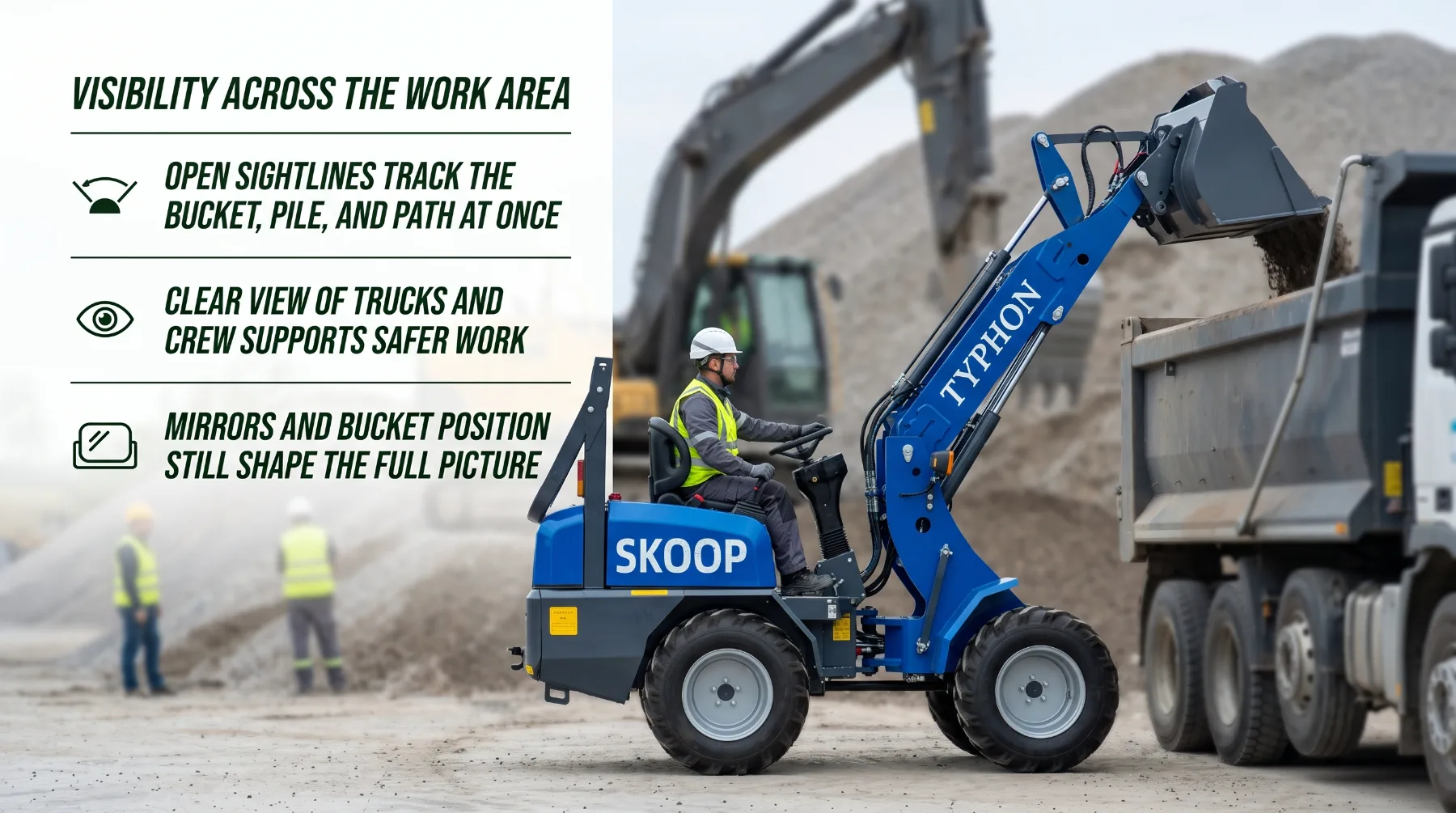
Outdoor loading rarely happens in an empty yard. Piles, trucks, stockpiles, and other equipment sit positioned around the machine, and the operator has to track all of it while working. The open canopy layout supports a broad view of that surrounding area, giving the operator strong sightlines in the directions that matter most during a loading cycle.
Good visibility does real work here. It helps the operator monitor the bucket as it fills, judge the height and edge of the material pile, watch the travel path between the pile and the truck, and keep an eye on nearby equipment and ground crews. On a busy site where the loader shares space with haul trucks and workers on foot, that clear view is both a productivity tool and a safety asset. Visibility still depends on machine design, bucket position, and clean, well-adjusted mirrors, but the open station gives the operator a solid starting point.
Key takeaway: The open layout supports a broad view of piles, trucks, and equipment, helping the operator manage the bucket, travel path, and surroundings through every loading cycle.
Handling Materials on Open Jobsites
The core job of a wheel loader is moving bulk material, and an open canopy machine handles that work as capably as any other configuration. Aggregate, soil, gravel, sand, and similar materials all fall within its daily range. With an appropriate bucket, the machine scoops from the pile, lifts, carries to the truck or stockpile, and discharges, then returns to do it again through cycle after cycle.
How well it performs, though, comes down to the machine's specifications rather than the open station. Several factors combine to determine real capability:
- Operating weight influences stability and how the machine handles a loaded bucket.
- Hydraulic performance drives how quickly and smoothly the loader fills, lifts, and dumps.
- Bucket capacity sets how much material moves per cycle.
- Traction determines how well the machine digs into the pile and holds footing on the ground.
Choosing a canopy loader for routine material handling means confirming these specs genuinely fit the loads and cycles the job demands. The open configuration takes nothing away from the machine's capability; it simply pairs that capability with the access and visibility an open site rewards.
Key takeaway: Open canopy loaders handle aggregate, soil, gravel, and sand well, but real performance depends on operating weight, hydraulics, bucket capacity, and traction matching the work.
Working in Changing Weather
The open design that makes a canopy loader so comfortable in fair conditions is also its main limitation, which is why weather sits at the center of the decision. Outdoor equipment meets sunlight, wind, rain, dust, and shifting temperatures across a single day, and an open canopy does not shut those out the way an enclosed cab does. The operator feels the conditions directly, so those conditions deserve honest thought before the machine goes to work.
That doesn't rule out an open machine; it just calls for planning. The operator should use suitable personal protective equipment and follow the machine manufacturer's operating requirements for the conditions at hand. Sun protection and hydration matter on hot, bright days, while dust and wind may call for eye protection and added care. When conditions turn harsh enough to affect comfort, focus, or safe operation, that is the signal to reconsider whether an open configuration fits the work, or whether the job would be better served by an enclosed machine.
Key takeaway: An open canopy offers less weather protection than an enclosed cab, so weigh sun, wind, rain, and dust honestly, use proper PPE, and follow manufacturer requirements before operating.
Access and Daily Operation
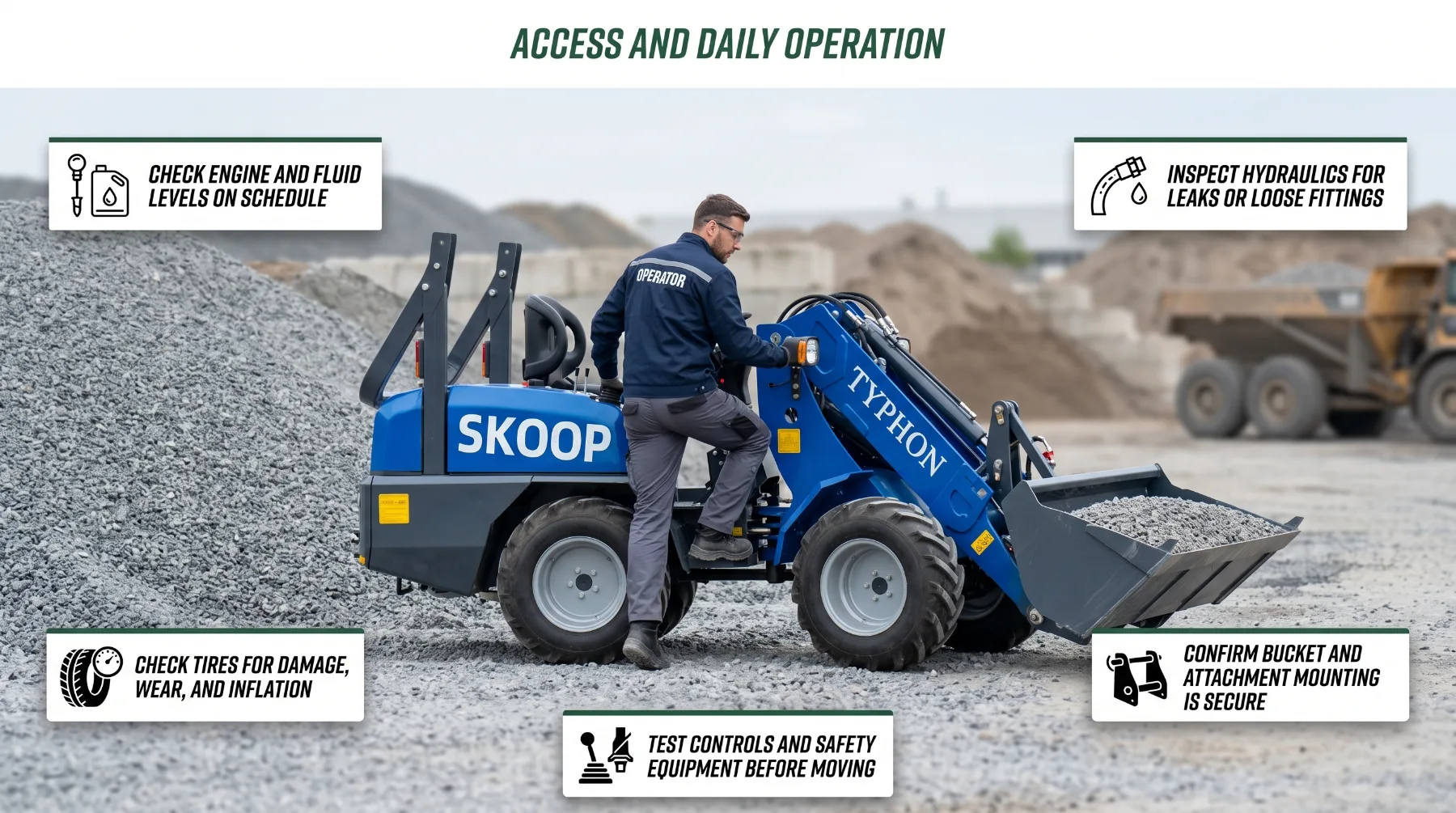
Frequent exits are part of outdoor loading work. Operators often step off the machine to inspect materials, check a load, or coordinate with truck drivers and ground crews, and the open canopy configuration makes each of those trips quick and simple. That easy movement keeps the workflow smooth on jobs that involve constant communication and hands-on checks.
The open layout also simplifies visual checks around the operator station, letting the operator see and reach key areas without working around a cab. Even so, easy access is no substitute for a proper daily inspection before work begins. A sound routine covers the essentials:
- Engine and fluid levels, checked against the manufacturer's schedule.
- Hydraulic system, inspected for leaks, damaged hoses, and loose fittings.
- Tires, checked for damage, wear, and proper inflation.
- Bucket and attachment mounting, confirmed secure and free of damage.
- Controls and safety equipment, tested before the machine moves.
Folding these checks into the daily walkaround keeps the machine dependable shift after shift.
Key takeaway: Easy entry and exit help operators inspect materials and coordinate work, but a full daily inspection of the engine, hydraulics, tires, bucket, and controls remains essential.
Matching the Loader to the Jobsite
An open canopy wheel loader fits outdoor applications where weather protection matters less than simple access and clear visibility. That's the sweet spot: open sites, fair to moderate conditions, and steady material-handling cycles where the open station is an advantage rather than a hardship. On those jobs, the configuration delivers a straightforward, efficient operating environment.
Fitting the machine to the work, though, goes well beyond the open station. The loader should be matched to the required load, the ground conditions underfoot, the travel distance between the pile and the dump point, and the attachment the task calls for. A machine ideal for short cycles on firm ground may struggle with long hauls or soft footing, so the complete working environment should guide the choice. When the loader's capability, the site conditions, and the open configuration all line up with the job, the machine performs reliably. Weigh those factors together, and the decision to use an open canopy loader becomes a confident one rather than a guess.
Key takeaway: An open canopy loader suits outdoor work where access and visibility outweigh weather protection, but it should still be matched to the load, ground conditions, travel distance, and attachment.
Conclusion
An open canopy wheel loader provides an operator station suited to outdoor material-handling applications where direct access, visibility, and manageable weather exposure are important. The open configuration allows convenient entry and exit and provides a broad view of stockpiles, trucks, attachments, and surrounding equipment during loading cycles. Machine performance, however, depends on the hydraulic system, bucket capacity, operating weight, traction, drivetrain, and rated payload rather than the canopy configuration itself. Reduced protection from rain, wind, heat, and cold also makes weather conditions an important factor when determining whether an open station is appropriate for the application. Easy access to the operator area can support inspections and routine checks, but a complete pre-operation inspection remains necessary. Loader selection should therefore consider payload, material density, bucket size, hydraulic requirements, ground conditions, travel distance, attachment configuration, duty cycle, and expected weather. Matching these factors to the actual jobsite allows an open canopy loader to provide practical and consistent performance for outdoor construction, aggregate, landscaping, and material-handling applications.
Frequently Asked Questions
What is an open canopy wheel loader?
An open canopy wheel loader has an operator area protected by an overhead canopy instead of a fully enclosed cab. The open sides provide natural airflow, easier entry and exit, and a more open view of the work area. The trade-off is greater exposure to weather, so this configuration is best suited to jobs where outdoor conditions are manageable.
Why use an open canopy wheel loader outdoors?
Key benefits include easy operator access, direct visibility, and an open operating environment. The design makes it convenient to inspect materials, coordinate with ground crews, and monitor trucks, stockpiles, and equipment during repeated loading cycles. It works well on outdoor sites where airflow and visibility are more important than full weather protection.
Can an open canopy loader work in rain?
Yes, in suitable conditions, but the operator has more exposure to rain, wind, cold, and dust than with an enclosed cab. Light or brief rain may be manageable, while heavy or continuous weather can reduce comfort and focus. Follow the manufacturer's operating guidance and consider an enclosed cab for jobs that regularly face harsh weather.
What work can an open canopy wheel loader perform?
Depending on its size and configuration, it can handle common material-handling tasks such as loading, carrying, stockpiling, and moving soil, gravel, sand, and aggregate. Operating weight affects stability, hydraulic performance controls loading and dumping cycles, bucket capacity determines material per cycle, and traction supports digging and travel. Match these capabilities to the load, distance, and ground conditions.
COMMENTS (0)
LEAVE A REPLY